Pay in installments of $7.14 with
 ,
,
 and
and

Shipping Estimate
USA
- USA
- CAN
- USA
- CAN
Ships within 48 hours · Estimated delivery Jun 28 - Jul 3
 Promo Codes Available:
For Your Every Summer RSVP, with Code: SUMMER15
Description
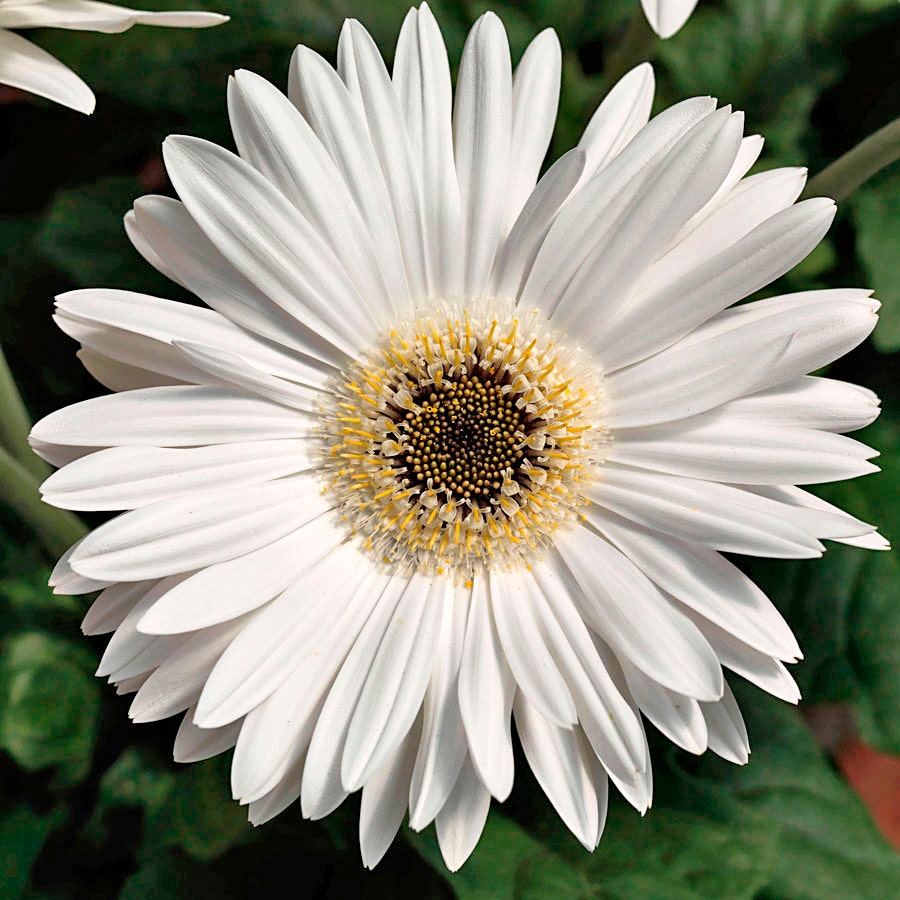
planting gerbera daisy seeds Majorette Bright White Dark Eye Gerbera SeedsDays to Maturity: 98 to 112 Majorette Bright White Dark Eye Gerbera is an evergreen tender perennial (in mild climates), typically grown as an annual, that blooms from early summer to late fall. A heavy and long blooming plant, Majorette Bright White sets an abundance of large daisies with bright white rays surrounding a dark eye. Borne singly on slim, stiff stems, the flowers make excellent, long lasting cuts and attract butterflies and bees to the
Days to Maturity: 98 to 112
Majorette Bright White Dark Eye Gerbera is an evergreen tender perennial (in mild climates), typically grown as an annual, that blooms from early summer to late fall. A heavy- and long-blooming plant, Majorette Bright White sets an abundance of large daisies with bright white rays surrounding a dark eye. Borne singly on slim, stiff stems, the flowers make excellent, long-lasting cuts and attract butterflies and bees to the garden.
A Gerbera jamesonii variety, commonly called gerbera daisy, gerber daisy, Transvaal daisy, or Barberton daisy, Majorette Bright White has a uniform habit and forms a lush, upright basal rosette of long dark green leaves. Gerbera daisies are classic cottage and cutting garden plants and are a mainstay in the perennial border. They make excellent edging and container plants too. Naturally accustomed to arid conditions, gerbera daisies are a great option for a xeriscape.
Gerbera daisies grow best in locations with full sun, but partial afternoon shade may extend bloom time, especially in climates with hot, dry summers. The soil should be rich with organic matter, moist, and well-draining. Soil should be allowed to dry slightly between waterings. An acidic soil pH between 5.5 to 6.5 is best; a higher pH may result in interveinal chlorosis (yellowing of the leaves), a lower pH, in black spots. Although gerbera daisies are low maintenance and robust, fertilizing regularly and deadheading spent flowers promotes a heavier, prolonged bloom.
Growing gerbera daisies from seed is easy. Direct sow gerbera daisy seed after the last frost in spring, as soon as the soil is warm, or start seeds indoors 6 to 8 weeks before the last frost date and transplant after all threat of frost has passed.
If you plan to start your seeds indoors, be sure to check out our Bio Dome Seed Starter Kit. With the Bio Dome, you can control the temperature, light, and soil mix to ensure your seeds become strong for transplant.
Shipping Notes
- Free Standard Shipping on $100+ Orders to the USA.
- Except Preorder products are shipped in 48 hours.
- Delivery to the USA:
- Standard Shipping : 3-10 business days
- If time is of the essence, please consider selecting expedited delivery for faster service.
Exchange/Return Notes
- We offer a 30-day return/exchange service after receiving.
- Final sale items are not eligible for returns or exchanges.
- To process your return/exchange, please contact us at [email protected]
- Please click here for more details>>> Return & Exchange Policy