Pay in installments of $5.21 with
 ,
,
 and
and

Shipping Estimate
USA
- USA
- CAN
- USA
- CAN
Ships within 48 hours · Estimated delivery Jun 28 - Jul 3
 Promo Codes Available:
For Your Every Summer RSVP, with Code: SUMMER15
Description
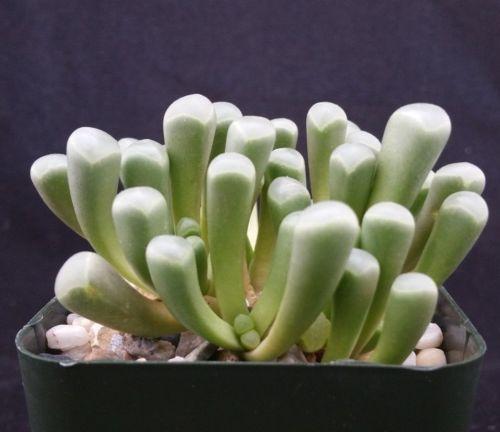
succulent that looks like toes Baby Toes 'Fenestraria rhopalophylla'Attention Gardeners, are you looking for a plant that will make your garden stand out? Look no further than the Fenestraria rhopalophylla, also known as baby toes or baby's toe, and window plant! These little clump forming baby toes succulents, hailing from Namibia and South Africa truly live up to their nickname. With their tiny, rounded leaves resembling the toes of an infant, it's hard not to fall in love with them at first sight! But wait until
Attention Gardeners, are you looking for a plant that will make your garden stand out? Look no further than the Fenestraria rhopalophylla, also known as baby toes or baby's toe, and window plant! These little clump-forming baby toes succulents, hailing from Namibia and South Africa truly live up to their nickname.
With their tiny, rounded leaves resembling the toes of an infant, it's hard not to fall in love with them at first sight! But wait until you get a closer look - these window-leafed succulents have transparent tips (like a window) reaching the height of 3 inches and 4 inches in diameter in their natural habitat, it almost seems like something out of a fairy tale. These tiny toes' translucent tips allow light to pass through them and reach the baby toe's underground stem, which helps them to survive in its arid desert environment.
Let's not forget about those delicate white or yellow flowers they produce in the early spring and fall! It's no wonder why these baby succulents are often referred to as living stones - they look like tiny rock formations with rounded baby toes sticking out. Propagating baby toes succulent plants from seeds and offsets is the easiest way to enhance your succulent collection.
These green toes are unlike anything you've seen before with their low maintenance. Imagine having this unique and eye-catching plant in your collection. Your garden will be the envy of all who see it!
Watering Requirements
Fenestraria can typically don’t need much water, so they are harder to kill than most houseplants; it can store water in its leaves. They still require infrequent but effective watering to maintain their cuteness and recharge their water storage. To determine when it's time to water, check the soil in-between waterings and wait until the first inch of soil is dry to the touch before watering again.
You should decrease the watering frequency to once a month or less in autumn. It's recommended to give them a deep-water soak once or twice a month when the soil is dry, during the active growing period in spring and winter, and sparingly during their dormant period in summer.
It's important to avoid over-watering baby toes or other succulents though, as it can lead to waterlogging or soggy conditions that can easily damage the plant. A baby toe succulent that has been overwatered can easily be identified by a crack or split on its leaves. Placing it somewhere dry, well-lit, and with controllable water intake can help solve this issue.
Light Requirements
The baby toes succulents should be planted in full sun outdoors and need a minimum of 5-6 hours of bright light daily to stay compact (usually refer to leaves that are smaller than usual, and that are closely spaced on the stem).
If they are not receiving enough sunlight, they may produce leaves that are elongated, thin, and pale in color, rather than compact and succulent. Without enough light, the plant may become leggy and weak, and its leaves may lose their distinctive shape and texture.
When grown indoors, place it in the sunniest place in your house. This baby succulent may benefit from shade in consistently hot climates. Growing this baby succulent in a west- or south-facing window is best. Most light will enter through a south-facing window. East and West windows are excellent, too! Northern-facing windows provide the least amount of light, so avoid them.
Optimal Soil & Fertilizer Needs
When it comes to choosing the right soil or succulent food for your adorable baby toes plant, you need to be careful! It's like picking out the perfect outfit for a date - you want to make sure everything is just right so there are no surprises later on.
You see, the amount of moisture in the soil can literally make or break your little green-toe friend. Too much water and BAM! You've got root and stem rot faster than you can say "Cactus." That's why we at Planet Desert have got your back with our specialized succulent potting mixGo to soil cactus mix blend 1 gal 4 qt cacti succulent dirt compost growing media, or regular potting succulent soil. This organic substrate has mycorrhizae which help to grow a healthy root system that makes all those spiky stems stand up tall and proud. As an okay alternative, you can create your own potting mix by combining equal portions of perlite, coarse sand, and good natural potting soil.
Natural fertilizers with a balanced ratio of NPK (5-10-5) also last longer and keep your soil alive by adding other beneficial compounds and microbes that encourage plant health and nutrient absorption. So, skip those harsh chemicals and give your succulent some love with some awesome organic fertilizer!
Hardiness Zones & More
Typically grown in hot, arid desert regions, the baby toes succulent thrives indoors in warm, dry surroundings. In general, a humidity level of 40% is sufficient to keep this plant happy and thriving.
If you live in USDA regions 10 to 12, you can also grow these baby succulents outdoors year-round, but they are not cold- or frost-tolerant, so during cold winters, you should plant them indoors or put them in a pot and move them indoors during the winter if you live outside of these regions. Keep your baby toes away from cold, drafty windows and air vents if you are growing them indoors in a cold climate.
Don't miss out on adding the Fenestraria rhopalophylla baby toes to your garden today! Order now and enjoy its beauty for years to come.
Shipping Notes
- Free Standard Shipping on $100+ Orders to the USA.
- Except Preorder products are shipped in 48 hours.
- Delivery to the USA:
- Standard Shipping : 3-10 business days
- If time is of the essence, please consider selecting expedited delivery for faster service.
Exchange/Return Notes
- We offer a 30-day return/exchange service after receiving.
- Final sale items are not eligible for returns or exchanges.
- To process your return/exchange, please contact us at [email protected]
- Please click here for more details>>> Return & Exchange Policy